
Lumilens Emerges From Stealth With More Than $900M in Funding to Tackle AI Data Center Bottlenecks

Lumilens has emerged from stealth with more than $900 million in total funding, unveiling an optical connectivity platform designed to address one of artificial intelligence’s biggest infrastructure challenges: moving massive amounts of data between increasingly powerful AI chips inside data centers. The company also announced that it has begun shipping products to a hyperscale cloud provider under a multibillion-dollar commercial agreement.
The San Jose, California-based startup said its latest financing exceeded $700 million and was co-led by Atreides Management, Bain Capital Ventures, Meritech, Seligman Ventures, and Spark Capital, bringing cumulative funding to more than $900 million since the company’s founding. The financing values Lumilens at approximately $5.5 billion, according to reports.
Lumilens is developing optical interconnect technology that replaces traditional copper-based data center connections with photonic links that transmit information using light. As AI models grow larger and data centers deploy more GPUs, the movement of data between processors has become an increasingly significant performance bottleneck. Optical connectivity promises higher bandwidth and better performance over longer distances than conventional copper wiring.
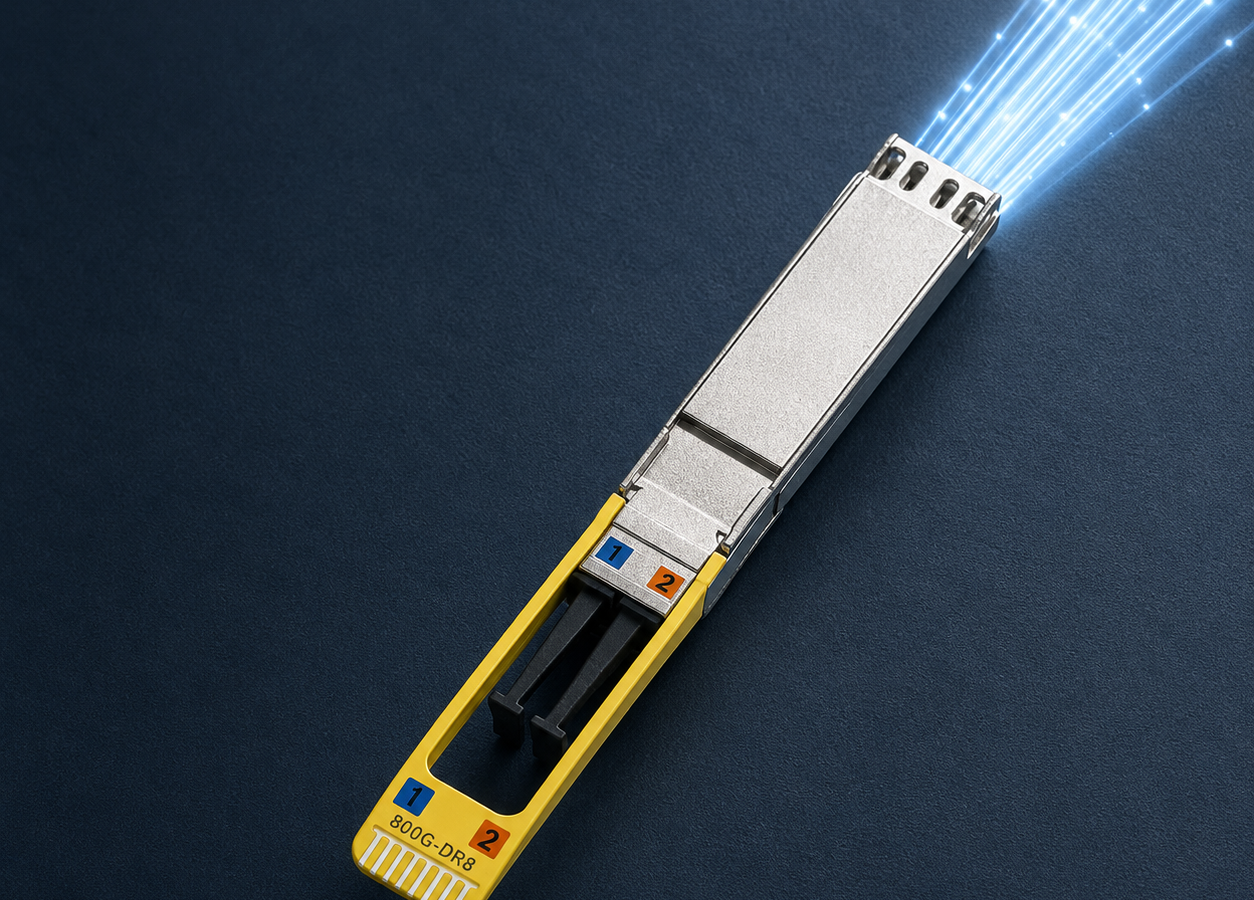
The company’s first commercial product is an optical transceiver that converts electrical signals into optical signals for transmission over fiber. Lumilens said it is already supplying the technology to an unnamed hyperscale cloud provider, which is deploying the hardware alongside its own AI chips as part of a multibillion-dollar agreement spanning the coming years.
Beyond inter-rack networking, Lumilens is also building optical technologies for connecting chips within a single AI server rack. The company refers to these as “scale-out” and “scale-up” networking solutions, targeting both major layers of AI infrastructure where data transfer speeds increasingly influence overall system performance.
While optical networking has long been viewed as a successor to copper in high-performance computing environments, widespread adoption has been limited by cost. Lumilens CEO Ankur Singla said the company’s objective is to narrow the cost gap between optics and copper while delivering the performance required by next-generation AI clusters. The company is also investing heavily in manufacturing and plans to produce its products outside China.
Lumilens enters a rapidly expanding market for AI networking infrastructure, where startups are racing to solve bandwidth constraints created by increasingly dense GPU deployments. As hyperscale cloud providers invest billions of dollars in AI infrastructure, demand is growing not only for faster processors but also for technologies capable of efficiently connecting them. The company’s emergence from stealth underscores how optical networking is becoming a critical layer of next-generation AI data centers, alongside advances in chips, memory, and power infrastructure.